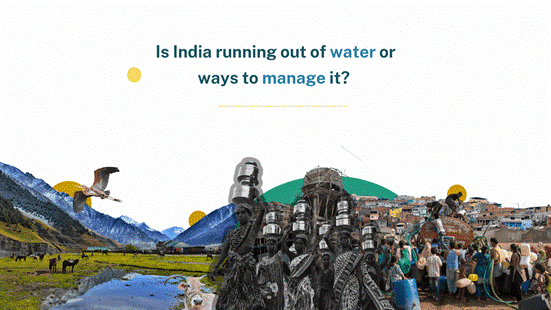
Water runs through India’s story in ways that are both visible and invisible. Yet, scarcity is fast becoming the defining thread of that story. The World Economic Forum report warns that water shortages will be India’s most critical challenge in the next two years. But what does this shortage look like on the ground?
In Maharashtra’s Melghat, women walk three kilometers for a pot of safe drinking water, even as heavy rains rush off the hills unchecked, lost to the absence of reservoirs and harvesting systems. In Shillong, known as the abode of clouds, the rhythm of life has shifted from springs to water tankers, as urbanisation and deforestation fray nature’s balance. And in Kashmir, half of the freshwater springs that once sustained generations have dried or shrunk in just two decades.
This edition of our newsletter journeys from villages to cities, plains to mountains, uncovering how scarcity is shaped not only by climate and geography, but also by decisions around management, policy, and resource use.
It leaves us with a question: Can we reimagine a future where water is not just fought over, but stewarded wisely together?
These stories remind us that the crisis is not just about water running out, but about how it is managed, shared, and governed. Urban standards are designed around numbers, not needs. Heatwaves stretch households to breaking point, especially women who must fetch and manage dwindling supplies. Climate change sharpens the stress, but beneath it lies choices of policy, of planning, of equity, that decide who gets to drink, and who goes without.
Three Kilometres for a Pot of Water: In Maharashtra’s Melghat Region, Clean Water Is Still a Distant Dream
In Melghat’s tribal villages, taps run dry, forcing women to walk for hours each day in search of drinking water. Families are often left with no choice but to collect water from unsafe, distant sources.
Tankers in the Abode of Clouds: Shillong’s Growing Water Crisis
Once known for its abundant springs and gentle rains, Meghalaya’s capital is now reliant on water tankers. What is going wrong?
Perched in the rolling hills of Meghalaya in the North-east of India is the capital city of Shillong, which is known for its cool climate and postcard-perfect charm. This city has long held the title of the “Scotland of the East.” Its misty mornings, pine-covered slopes, and bustling markets like Laitumkhrah, Police Bazaar, and Bara Bazaar attract tourists year-round. On the surface, it’s a city full of life, colour, and movement. But hidden beneath this beauty is a quieter, more troubling reality of the growing dependence on water tankers.
Once a lifeline, now a memory: What happened to Kashmir’s water springs?
More than half of Kashmir’s freshwater springs have dried up or shrunk in the past 20 years due to climate change induced lower snowfall and earlier melting in the spring recharge zones. In pockets of the valley, quiet efforts to protect and revive these lifelines are taking root, but lasting solutions remain out of reach and are urgently needed.
Who decides how much water you get? Behind the numbers that shape urban India’s water supply
Why does the per capita standard, a useful metric for planners and engineers remain a fictitious number for citizens? Dr Sachin Tiwale argues that the politics and power dynamics behind setting of per capita water standards often fails to capture the actual water needs of citizens.
When the heat rises, water runs out: How climate shocks are deepening water poverty in India
Climate-induced temperature shocks are deepening household water poverty in India, exposing vulnerabilities in rural areas and calling for adaptive solutions.
India Water Portal is a knowledge platform dedicated to water and related issues in India, managed by Arghyam.
https://www.indiawaterportal.org