Mar 6, 2026
A new review led by researchers at the University of British Columbia (UBC) warns that wildfire pollution can threaten drinking water supplies for years after the flames are extinguished, raising concerns for communities across Canada as fire seasons intensify.
The global review analyzed 23 studies spanning 28 watersheds worldwide, comparing pre- and post-fire levels of sediment, nutrients, metals, organic carbon, ions and firefighting chemicals. Researchers found that contamination often worsens months or even years after a blaze, particularly when heavy rain or snowmelt flushes stored ash and debris into rivers and reservoirs.
The findings come as wildfire activity in Canada reaches unprecedented levels. In 2023, more than 15 million hectares burned nationwide — more than double the previous national record.
“The same delayed contamination pattern kept appearing,” noted Raúl de León Rábago, a study author and master’s student in civil engineering at UBC, which issued an announcement about the wildfire review.
According to the review, wildfire-related contaminants — including sediment, nitrogen, phosphorus, heavy metals and polycyclic aromatic hydrocarbons — can complicate drinking water treatment by reducing removal efficiency and driving up operational costs. Researchers note that while modelling tools exist to simulate contaminant transport, wildfire scenarios require more sophisticated approaches that account for atmospheric deposition, erosion, hydrology and sediment exchange to better predict concentration spikes and remobilization events.
Alberta case studies underscore the long-term risks. Following the 2016 wildfire near Fort McMurray, rivers recorded elevated levels of sediment, nitrogen, phosphorus and lead — even in areas where less than a quarter of the watershed had burned. The Regional Municipality of Wood Buffalo increased its annual treatment chemical spending by roughly $500,000 to manage wildfire-related changes in raw water quality.
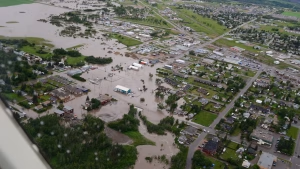
In southern Alberta’s Rockies, impacts from the 2003 Lost Creek wildfire persisted for years. Flooding in 2013 reintroduced stored ash and soil into waterways, causing phosphorus levels to surge seven to nine times normal levels, with some increases lingering more than 14 years downstream.
“Imagine emptying a bucket of ash into a bathtub,” said Dr. Qingshi Tu, an assistant professor in UBC’s faculty of forestry & environmental stewardship. “When the water is stirred, the ash resurfaces. That’s what can happen in watersheds after large fires.”
The study also points to the role of smoke and firefighting chemicals in compounding risks. Long-term fire retardants such as Phos-Chek, commonly used in B.C. and Alberta, contain nutrients and trace metals that can fuel algal blooms and further strain treatment systems.
Researchers say the ability of utilities to respond depends on factors including fire intensity, watershed size, weather patterns and the design of local treatment systems. Smaller or resource-limited communities may face heightened vulnerability to prolonged post-fire impacts.
To help utilities anticipate multi-year risks, the research team is developing a model linking wildfire behaviour, smoke transport and river systems. They argue that provinces such as B.C. and Alberta require coordinated long-term water monitoring and preparedness planning, particularly where fires occur near drinking water sources.
“Canada is entering a new era of wildfire risk,” said Dr. Loretta Li, senior author and UBC civil engineering professor. “If we want to protect drinking water, we have to treat wildfire impacts as long-term, not short-term.”
https://esemag.com/water/review-warns-wildfires-pose-long-term-threat-to-canada-drinking-water