AI is a vampire that will never be satisfied and could leave us drained.
Graeme Lee Rowlands Mar 12, 2026 5:45 AM
A commentary by the Water and Climate Director at Wildsight. He has spent a decade studying B.C.’s hydropower system and touring people along its rivers.
British Columbia still has an enviable power system. Don’t let data centres wreck it.
The B.C. government has capped electricity available to AI and other data centres at 400 megawatts (MW) of capacity over the next two years — over three per cent of BC Hydro’s total 12,000 MW system. Initial bidding for this power closes on Monday. New cryptocurrency mines are banned.
As tech companies continue their AI spending frenzy, pressure will mount to raise this cap for accelerated data centre growth. For the sake of our power grid and watersheds, B.C. should use extreme caution.
AI is a vampire that will never be satisfied and could leave us drained.
For decades, B.C. has held an economic advantage over other jurisdictions by virtue of its relatively abundant and cheap electricity.
Today, that advantage is more precarious as power demand grows not just from AI but also from growing populations, electrified vehicles and buildings, new mines and the government’s decision to go all in on supercooling fracked methane gas for export.
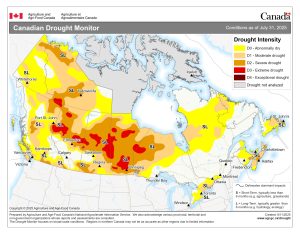
At the same time, B.C’s hydropower supply is becoming less predictable as climate change impacts rainfall patterns and snowpacks.
The province trades electricity with the U.S., but in drought years, B.C. relies more on imports. In 2023, 2024 and 2025, it was a net importer.
Even so, B.C.’s electricity system remains among the most reliable and affordable in North America.
Especially in tight fiscal times, protecting that stability should be a priority.
All around us, the data centre boom is drifting towards an electrical hangover.
Dozens of U.S. states, counties and cities are trying to get a handle on the AI industry before it leaves citizens and ratepayers with even higher bills, lower reliability, less power for other industries and numerous local negative impacts.
Next door, Alberta has a temporary cap of 1,200 MW for data centres — triple B.C.’s 400 MW cap.
But, really, both amounts are tiny compared to AI’s insatiable appetite, which isn’t going anywhere soon.
Alberta’s 1,200 MW will only power two large data centre projects. There are 42 more in line requesting a total of 21,000 MW from Alberta’s grid. That amount of power is equivalent to 19 Site C dams, a project completed last year for $16 billion, which is now being repaid via our B.C. Hydro bills.
We should also worry about water impacts. Data centres use millions of litres of potable water to keep their electronics cool. A common method is to push hot air through wet pads, which means water evaporates and is not recycled.
Communities and watersheds across B.C. are facing escalating water stress.
More than two-thirds of British Columbians are concerned about a major water crisis in their community in the next few years.
Dawson Creek (population 12,000) is aiming to fast-track a $100 million pipeline to diversify its water sources after a multi-year drought left it under a state of emergency for 170 days this winter.
And water shortage isn’t the only aquatic issue at hand. Local fish, wildlife and people are directly affected by altered water levels below dams and in the reservoirs above them.
In the Columbia River Basin, where I live and work, First Nations and local communities have spent years working with the provincial government to explore options for operating dams in ways that enhance damaged ecosystems, uplift local economies (tourism, recreation, commercial navigation, agriculture) and protect Indigenous cultural values.
There can be tension between absolute maximum power generation and the water levels that support these critical needs. I suspect similar dynamics are at play on dammed rivers across B.C.
We cannot allow AI to squeeze the life out of the watersheds we depend on, or diminish our hard-won electrical advantage. The B.C. government’s cautious approach is fully justified.
We should maintain this caution and continue learning from the problems other jurisdictions are grappling with in this “wild west” era of AI.