An economy cannot be strengthened by weakening the natural systems that support it. That is precisely what budget 2026 risks doing.
Michael Bloomfield
A commentary by an ecologist and corporate social responsibility expert. He lives in Victoria.
British Columbia faces real fiscal pressure, and we do need to get our fiscal house in order. But doing so at the expense of the ecosystems that sustain us is foolish and short-sighted.
An economy cannot be strengthened by weakening the natural systems that support it.
That is precisely what budget 2026 risks doing.
While sustainability, electrification and economic “future proofing” dominate the narrative, biodiversity is not a priority, conservation capacity is shrinking and industrial activity is being framed as environmental progress.
The growing gap between rhetoric and reality is troubling.
The lead ministry for conservation and biodiversity is the Ministry of Water, Land and Resource Stewardship. If biodiversity protection were central, its operating capacity would be visibly expanding. It is not.
There is no bold implementation plan for the tripartite Canada B.C. Nature Agreement, no scaling up to meet B.C.’s commitment to 30 per cent by 2030, no expansion of species recovery, habitat mapping, ecological monitoring, enforcement, or long-term stewardship.
The Ministry of Environment and Parks, which works alongside the Ministry of Water, Land and Resource Stewardship on protected areas and wildlife management, also shows no strengthening of core conservation capacity.
Core operating funding declines in real terms to about $149 million from about $155 million, while the Park Enhancement Fund rises from about $13 million to more than $19 million. Protection shrinks while park amenities expand.
When governments prioritize something, they name it, elevate it and fund it. Biodiversity is not being treated as a foundational policy.
By contrast, economic and infrastructure ministries dominate the fiscal plan.
The Ministry of Forests foregrounds timber supply and output, even as old-growth commitments remain unfulfilled. B.C. Timber Sales remains focused on revenue, while habitat protection is not backed by serious action.
The Ministry of Energy and Climate Solutions and B.C. Hydro highlight electrification and grid expansion. Emissions reduction matters.
However, expanded transmission corridors and mining intensify ecological damage and landscape fragmentation. B.C. Hydro capital spending runs into the hundreds of millions of dollars, dwarfing biodiversity protection.
The Ministry of Jobs, Economic Development and Innovation advances the Clean Industry Fund and other supports framed as environmental measures, yet largely subsidizes industrial activity.
One $35 million allocation to the Clean Industry Fund nearly equals the annual operating budget for Environmental Protection. Such an imbalance is revealing.
The Ministry of Transportation continues major developments that increase ecological disturbance, from construction impacts to expanded access to wilderness.
By any measure, rebranding industrial expansion as environmental progress is misleading at best and deceptive at worst.
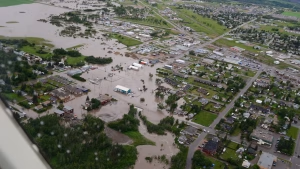
Healthy ecosystems regulate water, reduce wildfire severity, buffer floods, sustain fisheries and wildlife, store carbon and support rural economies. In real terms, that is worth billions. Yet those values rarely appear on a balance sheet.
An economy that depletes the ecosystems on which it depends weakens its own foundation. The province is already spending billions managing the consequences of environmental damage from development.
Allowing conservation capacity to stagnate during industrial expansion increases fiscal and ecological risk.
British Columbia’s motto is Splendour Without Diminishment.
Budgets reveal what we are prepared to defend and what we are ready to sacrifice.
Without clearly prioritizing biodiversity and aligning economic ministries accordingly, the province drifts toward Diminishment Without Splendour.
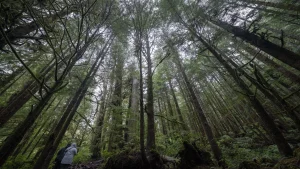
Nature is not an accessory to economic growth. It is a precondition for healthy environments, communities and economies.
Prosperity based on exploiting, not stewarding, the environment is a dangerous illusion.