Introduction
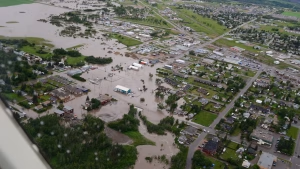
Watershed security is about future-proofing BC’s communities and economy. But the climate disasters our community has experienced are part of a vicious cycle made worse by decades of poor land use practices, development and the degradation of our community watershed. These climate events have cost BC nearly $11 billion in recent years. At the same time, water insecurity is disrupting entire industries, from agriculture and tourism to forestry and energy. We can’t afford to stay trapped in this costly cycle of crisis response.
Recommendation #1: Accelerate job creation in BC’s watershed workforce by bringing industrial water rental rates in line with other provinces and dedicating $50 million annually to the BC Watershed Security Fund.
Recommendation #1 Explanation: Currently, B.C. collects close to $500 million annually in water rental revenue, but only a small portion of this amount comes from industrial water users, and none of this revenue is reinvested in improving watershed health. Upwards of 95% of total revenue comes from hydropower generation, with only ~3% coming from industrial users and agriculture, municipal, and domestic use making up the remainder.
At the moment, BC is essentially giving away water for industrial use, charging the lowest water rental rate in Canada. In BC, the ‘maximum’ rate paid by industrial water users is just $2.25 per million litres, although many pay less. This compares to the ‘minimum’ industrial charges of $17 in Saskatchewan, $35 in Quebec, and $145 in Nova Scotia for the same amount of water. At the high end, Ontario and Quebec charge up to $500 per million litres, which is 22,000% more than BC.
Recognizing tough economic times, these fair rate adjustments would apply only to large industries—not farmers or municipalities—where water costs are negligible in overall business expenses and far below material thresholds in most financial reporting. BC hasn’t reviewed its water rental rates since 2016. At the time, a commitment was made to review and revisit water rental fees, yet this has never happened.
Dedicating $50 million annually to the Watershed Security Fund from water rental revenue is a smart, future-focused investment that reflects the values and priorities of British Columbians. The Fund, co-developed with First Nations and launched with an initial $100 million, is an important start. But right now, it only generates $3–5 million annually for grants, while demand continues to surge: the first two intakes received $75 million in proposals. With $50 million dedicated annual funding, BC could unlock 3,500 new jobs in three years and 10,000 within a decade.
Recommendation #2: Invest $5–10 million/year to support local watershed boards.
Recommendation #2 Explanation: Right now, BC is one of the only provinces without a formal system for local watershed governance. These boards create jobs, reduce pressure on provincial systems, and bring Indigenous and local governments together to co-develop solutions before crises escalate. They use modest core budgets to attract substantial external funds, which support local businesses and create quality jobs. They achieve cost-efficiencies by pooling regional expertise and leveraging existing capacity through partnerships with local organizations. As a result, they deliver positive watershed outcomes at a fraction of what it would cost senior governments.
The benefits of having local water boards are enormous but specifically can support BC’s efforts towards solutions-oriented climate action, social cohesion and reconciliation. These boards develop solutions to interconnected issues, such as the cumulative pressures of various land-use activities, rising water demand, threats to drinking water sources, and the costly impacts of drought, floods and wildfire. Their collaborative structure facilitates the best decisions for the watershed through difficult but respectful conversations among senior governments, First Nations, regional districts, communities and businesses and environmental groups. Crucially, they give local people a voice in decisions that impact their homes. By building on the strengths of Indigenous knowledge and Western science, these local bodies implement community-led solutions with long-term benefits for everyone.
In Cowichan, a local board helped the region avoid major conflict during past droughts. Similar efforts in the Kootenays and Nicola are improving coordination and reducing crisis response costs. A modest investment of $5 to $10 million annually would empower Indigenous and local leadership, create space for collaboration, and reduce pressure on provincial systems by solving water problems early and locally.
Recommendation # 3 : AMEND ACTS*
Recommendation #3 Explanation**
On our Island, Vancouver Island, most of our watersheds are owned by forest companies.
When these companies go in and clearcut the forests, the watersheds are left vulnerable, and many watersheds are having great difficulty surviving. Without water, there can be no life.
Communities have had to put out millions of dollars on water treatment plants because of damage done by clearcutting.
The Forest Acts, which includes the Private Managed Forest Lands Act, ALL of them, the Mining Act, are all in desperate need of amendment to save what is left.
This government has had many recommendations on Forestry issues, including the 2019 report and recommendations that you indicated you were going to implement. Groups of activists have had meetings with this government on these issues and what has been done? Nothing! This just must not be ignored any longer…please!
Personally, I need a planet left for my grandson to live on and at the rate we are going, there will not be a planet left. This makes me very sad. I know I am only one of hundreds that feel as I do.
Please read and listen to your constituents. These issues are all key and must be addressed.
Sincerely,
June Ross
Chair – Vancouver Island Water Watch Coalition
Editor – www.vancouverislandwaterwatchcoalition.ca