Vancouver-based Ascot Resources penalized for violations at its Premier Gold Mine as the company undergoes leadership and debt overhaul.
Stefan Labbé
Jan 5, 2026 4:30 PM
A B.C. firm has been penalized more than $142,000 for failing to maintain a shuttered gold mine that was found to have leaked waste into the environment at levels dozens of times over provincial limits.
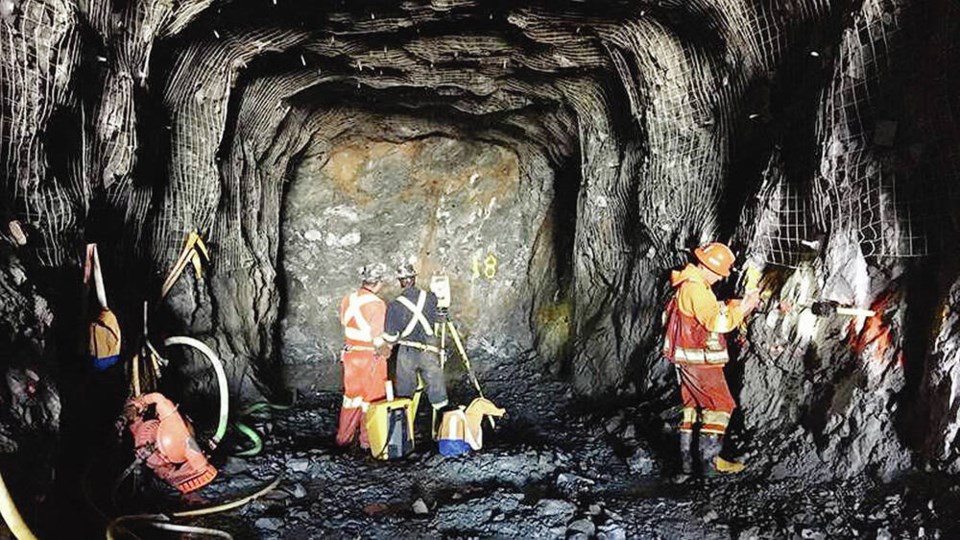
Located about 25 kilometres from Stewart, B.C., the Premier Gold Mine was purchased in 2018 by Ascot Resources Ltd., which intended to restart operations.
The mine was initially opened during the First World War and operated for more than seven decades before being shuttered in 1996.
Operators maintaining a closed mine are required to ensure waste stored underwater in massive tailings ponds— essentially a dammed reservoir — does not leak into the environment.
But when inspectors with B.C.’s Ministry of Environment and Parks visited in June 2024, they found the old mine had exceeded discharge limits 218 times in 2023.
At one point at the end of that year, dissolved iron concentrations — which can smother eggs or living creatures — were found to have climbed 53 times higher than the mine’s permit limit.
In a decision handed down Dec. 17 but only recently released to the public, director of the Environmental Management Act Kelly Mills said the “significant magnitude” of the discharges squarely meets the definition of a “major” contravention.
“The potential for exceedance was reasonably predictable, the source of the risk was known to Ascot, and Ascot appears to have taken minimal steps to prevent or mitigate that risk,” said Mills.
No measurable evidence mine waste harmed aquatic species
The mine waste was found to have been discharged into a creek that flows into the Salmon River, which supports four species of its namesake fish as well as the Coastrange sculpin and Dolly Varden char.
Mills wrote that the aquatic environment had been impaired by cadmium, copper and zinc from the mine.
Each of the metals can be toxic to aquatic and human health, with chronically toxic levels of zinc capable of killing fish by destroying their gill tissues or triggering deadly levels of stress.
However, a lack of measurable impact on life in the nearby creek meant the real effects on the environment “can be mitigated or repaired and are best characterized as medium,” wrote Mills.
Ascot disputed the violations, saying the creek’s copper levels were naturally high and that the lack of measurable effects on downstream life should lead the ministry to reduce its penalty.
Mills disagreed. She increased the penalty to the company over the continuous nature of the violations and its past record.
Ascot had been previously sanctioned and ordered to pay more than $54,000 in 2023 for multiple non-compliances and penalties.
Financing delays, wastewater plant lost at sea
Ascot argued the violations were the result of more strict limits that went into effect in 2022 after it moved to restart the mine.
The company argued that if it had not decided to invest in the Premier mine, there would have been no changes to the permit and its discharge limits.
It recommended that the ministry lower the environmental contravention to a “moderate” violation.
“The reality is that the water quality at [the site] was unchanged and remained … below or similar to the average discharge concentrations for the previous 27 years of available data,” the company said in its submission.
Ascot said it began clearing the site for a new wastewater treatment plant in 2021, but a series of “unforeseen and significant” delays followed.
Late that year, the main components of the plant were lost at sea, and in April 2022, Ascot lost financing and construction was placed on hold, according to the decision.
Ascot argued that because the mine is in care and maintenance mode, the imposition of a penalty would hinder its ability to achieve and maintain compliance.
Mills rejected that argument. The director said her jurisdiction was limited to assessing the facts surrounding the monetary penalty, not the ministry’s previous “technically rigorous” permitting processes.
She also noted that the company failed to address a previous finding that had determined past limits on the mine had not properly protected against risks to human health and the environment.
“After considering the relevant information above, I confirm the failures are major,” wrote Mills.
Ascot did not immediately respond to a request for comment.
Final cost of penalties dropped by more than half
Mills also penalized Ascot for failing to sample ground and surface water coming out of the old mine site.
Based on information provided to the ministry, more than six months of monitoring were missed at almost half of the groundwater monitoring sites.
Ascot argued it could not access safe sampling sites because a winter road was not cleared, and there was a significant avalanche hazard. But Mills noted that the company’s permit requires it to install and maintain safe sampling sites.
“Ascot elected to discontinue road maintenance and failed to prioritize maintaining safe access to groundwater wells during the winter,” she wrote.
Further penalties were issued to the company for failing to maintain a temporary pipeline built in 2018 to collect runoff from old mine tailings. The pipelines, which were made of plastic and were prone to breaking from ice blockages, failed multiple times until they were upgraded in 2024, according to the decision.
“While Ascot did not take direct action to cause the failures, its inaction increased the likelihood of failures,” wrote Mills.
The director agreed the company had taken measures to ensure it was carrying out due diligence, including installing a temporary filter plant (which ultimately failed) and an interim water treatment plant at a claimed cost of $2.45 million. The director reduced the company’s penalty for those efforts.
And in a major break for Ascot, the director chose not to multiply major penalties for discharge violations for each day of non-compliance.
Altogether, the penalties were reduced to $142,289 from an initial assessment of $328,056.
Future of mine remains in limbo
Ascot has faced significant financial problems in recent years after acquiring the Premier mine and several other nearby deposits, including the Red Mountain gold project.
It wasn’t until January 2023 that the company said it had completed documentation for about $200 million in financing to restart the mine.
Ascot first melted and cast gold at its Premier mine project in April 2024. But since then, it has not generated enough revenue to offset what ended up being lower grades of ore from one of its operational mines.
By September 2024, the company’s ore production had fallen behind schedule, prompting Ascot to suspend operations so it could catch up with mine development.
The company reported a net loss of $31.5 million in 2024, nearly triple its net losses a year earlier.
By May 2025, Ascot owed tens of millions of dollars to creditors, including $8 million more than 90 days past due — a situation the company described at the time as “serious financial difficulty.”
Meanwhile, Ascot told the ministry it had received a letter from the Toronto Stock Exchange saying it would have its common shares delisted due to failure to meet requirements.
On June 25, 2025, Ascot suspended the Premier mine project and put it back into care and maintenance “with no timeline to resume development,” according to its latest financial statement.
The company said its ability to pay the environmental penalties is “extremely limited.” It has until mid-January to appeal the decision.

Ascot lost a net $345 million over the first nine months of 2025, and by the end of September 2025, it had a working capital deficiency of more than $294 million.
At the time, the company said it had defaulted on scheduled payments on borrowed money, had limited cash, negative working capital and no other sources of income.
Last week, Ascot announced it had finished an $80.1-million round of funding and restructured its debt with major creditors to settle lien claims and further fund the development of its Premier and Red Mountain mine projects.
The company also underwent a major leadership overhaul, with president, CEO and director Jim Currie stepping down and Robert McLeod taking his place.
The company has also added several executive and board members to guide a “new development vision,” which McLeod said will soon include a corporate rebrand, proposed name change, and detailed plans for development of the company’s projects.
Ascot said it has received conditional approval to be reactivated on the TSX Venture Exchange following its latest moves to raise money and restructure the company.
CORRECTION: A previous version of this story mistakenly identified the Red Mountain mine as one of the natural resource projects fast-tracked by government.