Thursday, Feb 19, 2015 06:00 am
By: Lynn Martel
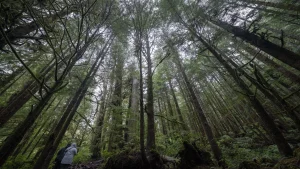
Trees growing in the upper Ghost River watershed are worth more to Albertans in the ground than if they are harvested to create plywood, paper or mulch.
That was the message Canmore resident Bob Sandford, EPCOR Chair of Global Water Security for the United Nations University?s Institute for Water, Environment and Health shared in a recent presentation.
Hosted by the Alberta Wilderness Association at its Calgary headquarters, the event was planned in response to plans by Spray Lakes Sawmills, which holds a forestry management agreement for the Ghost watershed, to accelerate plans to clear-cut sections of land. Plans that were approved by Alberta Environment and Sustainable Resource Development (ESRD) for logging of 900 hectares over a graduated 20-year schedule have now been compressed into just three years.
The consequences of that compressed schedule, said Gordon MacMahon, one of the Ghost watershed?s 400 residents and a member of the group Stop Ghost Clearcut, have the potential to dramatically exacerbate downstream flooding, among other detrimental effects.
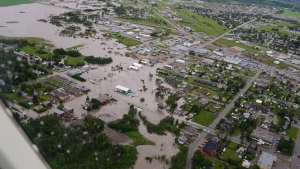
?The flood of 2013 opened a lot of eyes to where Calgary?s water comes from,? MacMahon said. ?Throughout the year, the Ghost watershed is a source of water for Calgary. During the 2013 flood, it supplied floodwater too.?
Located within the MD of Bighorn, the Ghost watershed covers nearly 1,000 square kilometres, most of it public land in the Rocky Mountain Forest Reserve. Most of its flow originates in the mountains that form Banff National Park?s east boundary. A tributary of the Bow River, the Ghost River provides 10 per cent of the Bow?s flow measured upstream of Calgary. During the flood of 2013, one-third of measured volumes on the Bow River came from the Ghost watershed.
Clearcutting, MacMahon said, fragments and degrades the landscape and creates barren terrain, increasing the amount of sediment in Ghost Reservoir.
?What is the longevity of Ghost Reservoir if it?s filling up with silt?? MacMahon asked. ?Does it makes sense to clearcut upstream of a city of 1.2 million??
Clearcutting the Ghost watershed without adequate understanding of the consequences means sacrificing the capacity upland forests have to slow and moderate climate change effects, Sandford said.
?By clearcutting the forests and compacting the soils, we are taking away free natural water storage and purification services for southern Alberta communities,? Sandford said. ?Healthy soil rich in microorganisms and their aggregates holds water like a sponge, releasing it slowly to plants as well as to aquifers, streams and rivers. In combination, these effects even out the release and availability of water throughout the year. Healthy soil is now seen as the best protection for crops during a drought, as well as the best protection from floods.?
Logging, Sandford continued, targets the areas with the best trees and the best soil. Clearcutting trees for short-term profit, he suggested, amounts to a tradeoff for the valuable ecosystem services that forests naturally provide.
?The tradeoff includes diminishing flood and drought mitigation resulting in compromised societal resilience to disaster,? Sandford said. ?This means we are permitting the developer to pass on to the public all financial and personal costs associated with potential future downstream flooding impacts associated with clear-cutting.
?Soil health and attendant critical carbon storage is also being compromised, making it almost impossible to deal with the fact that temperatures are already on the rise throughout the prairies and are expected to continue rising at a rate higher than that of any region in Canada except the Arctic.
?And what are we being offered in exchange? A few jobs in Cochrane, a few sticks of lumber and a few bags of landscaping mulch. Is this sustainable development??
When asked by phone if Spray Lakes Sawmills? plans to accelerate its harvesting schedule had been scientifically reviewed, Duncan MacDonnell, public affairs officer for the Province said it had, and that the total volume of forest scheduled to be harvested was not sufficiently large to raise any concerns.
?The harvest plans would have been reviewed by a forest hydrologist,? MacDonnell said. ?The harvest volumes here are not substantial enough to trigger a flood threat.
?And,? he added, ?everybody agreed that flood was caused by an extreme volume of rainfall. Normal rainfall would not affect the chances of flooding from logging.?
In his presentation, Sandford said the effects of climate change, which are already being experienced globally, including on Canada?s prairies, are rendering established weather patterns unreliable for predicting any future climate events.
?We have entered a period in which more frequent extremes in hydrological conditions now make it impossible to use past experience as a guide to prediction,? Sandford said. ?We have to prepare for more powerful storms and more frequent flooding because that is what we are likely going to get.?
MacMahon also expressed concerns that buffer zones between clearcut areas and wetlands and riparian areas are inadequate, and that grizzly dens are being crushed by logging equipment because insufficient studies have been done to determine where dens are located.
?If you don?t know where the bear dens are, how do you apply a buffer?? MacMahon said. ?How valid is the science that was done in support of this plan??
For its part, the group Stop Ghost Clearcut is urging a moratorium on logging activity until more science has been done.
?We?re not anti-logging,? MacMahon said. ?We?re advocating more measured, science-based activity. We?ve got to slow down and get a full grip on understanding the consequences of taking out these trees at the rate planned.?
http://www.rmoutlook.com/article/20150219/RMO0801/302199972/-1/rmo/accelerated-logging-plans-in-ghost-see-opposition